AP Micro 2025
Shanmao online question bank | Archived 2026-10-25
Section I - Multiple Choice (60 questions)
Question 1
If Aurora maximizes her total utility by spending her entire budget on purchasing apples and oranges, which of the following best explains her decision making?
A. The amount spent on apples is equal to the amount spent on oranges.
B. The total utility received from consuming apples is equal to the total utility received from consume oranges.
C. The marginal utility received from consuming the last apple is equal to the marginal utility received from consuming the last orange.
D. The marginal utility of the last dollar spent on apples is equal to the marginal utility of the last dollar spent on oranges.
E. The marginal utility received from consuming the last apple and that received from consuming the last orange are both maximized
Question 2
Shrimp and chicken are substitute inputs on the production of Frozen meals. Both shrimp and chicken are sold in perfectly competitive markets. If the government imposes a per-unit tax on shrimp, how will the demand for chicken and the equilibrium price of Frozen meals be affected in the short run?
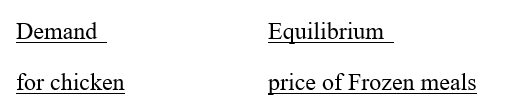
A. increase
increase
B. increase
decrease
C. increase
no change
D. Decrease.
Decrease
E. No change.
Increase
Question 3
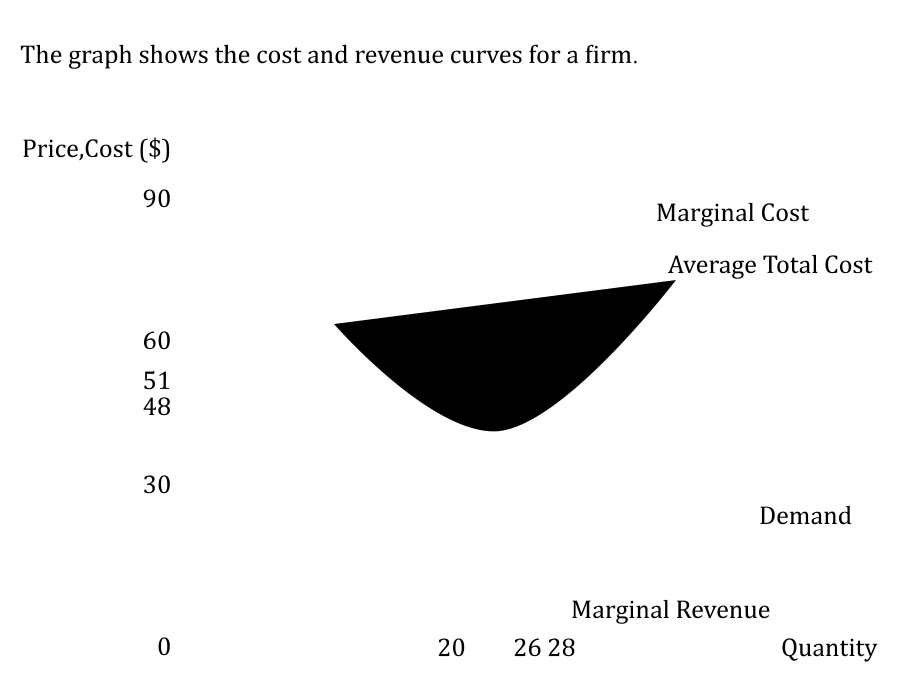
The firm operates in an imperfectly competitive market and produces the profit-maximizing quantity of output. If the firm could engage in perfect price discrimination, what would be the resulting consumer surplus and the change in deadweight loss?
A. Consumer surplus would equal0, and deadweightloss would decrease by 90
B. Consumer surplus would equal 0, and deadweightloss would increase by 90.
C. Consumer surplus would equal 507,and deadweightloss would increase by 180
D. Consumer surplus would equal 300 and deadweightloss could increase by180
E. Consumer surplus would equal 630, and deadweightloss could decrease by 180
Question 4
Which of the following would cause an increase in the supply of tacos in the short run?
A. The price of tacos decreases.
B. The demand for tacos increases.
C. The price of beef, an input in the production af tacos, decreases
D. The price of guacamole, a complement in consumption for tacos, decreases.
E. The price of burritos, a substitute in consumption for tacos decreases
Question 5
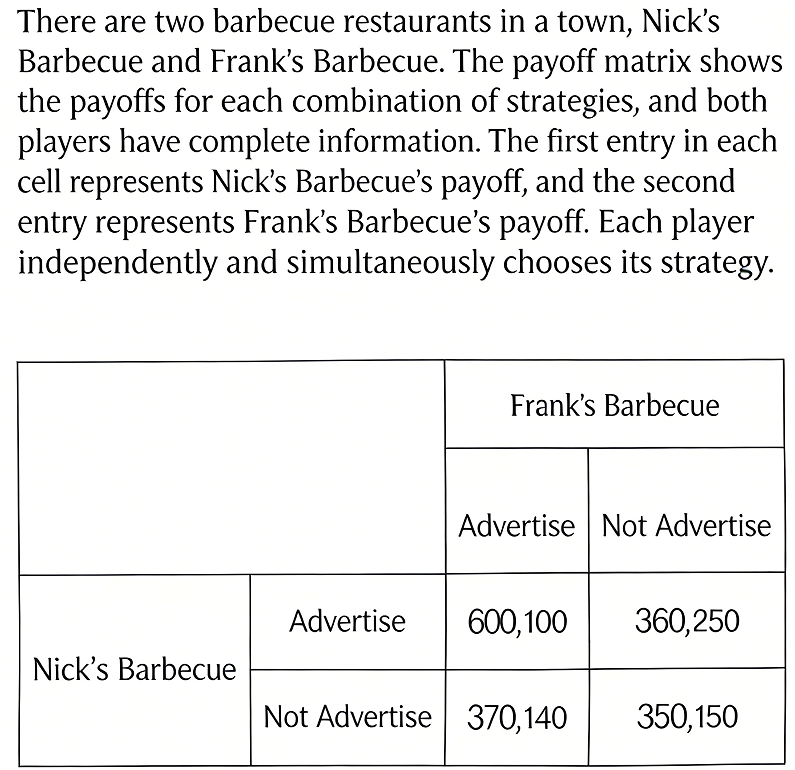
Which of the following is true about the restaurants dominant strategies?
A. Nick Barbecue's dominant strategy is Advertise, and Franks Barbecue's dominant strategy is Advertise.
B. Nick's Barbecue's dominant strategy is Advertise, and Frank‘s Barbecues dominant strategy is Not Advertise
C. Nick's Barbecue's dominant strategy is Not Advertise, and Franks Barbecue's dominant strategy is Advertise
D. Nick's Barbecue's dominant strategy is Nor Advertise, and Franks Barbecue’s dominant strategy is Not Advertise.
E. Nick's Barbecues dominant strategy is Adverse, and Franks Barbecue does not have dominant strategy
Question 6
Brass With Class is a profit-maximizing firm that produces trumpets in a monopolistically competitive market. Brass With Class currently produces 100 trumpets and sells each trumpet at a price of 50, If the average total cost when producing 100 trumpet is 45, what is Brass With Class's total economic profit in the short run, and what adjustment will happen in the trumpet market in the long run?
A.
| Economic profit |
long-run Adjustment |
| -$500 |
existing firms will exit the market |
B.
| Economic profit |
long-run Adjustment |
| -$5 |
existing firms will exit the market |
C.
| Economic profit |
long-run Adjustment |
| $0 |
the market will be in long-run equilibrium |
D.
| Economic profit |
long-run Adjustment |
| $5 |
new firms will enter the market |
E.
| Economic profit |
long-run Adjustment |
| $500 |
new firms will enter the market |
Question 7
Initially, Markus corporation is the only firm that produces aluminum. The government breaks up Markus’ monopoly,creating two firms in its place. The long-run ATC for each firm is higher than if Markus operated alone in the industry. This would suggest that before the breakup, Markus corporation was operating under conditions of:
A. Monopolistic competition
B. Nash equilibrium
C. Decreasing returns to scale
D. Economies of scale
E. diseconomies of scale
Question 8
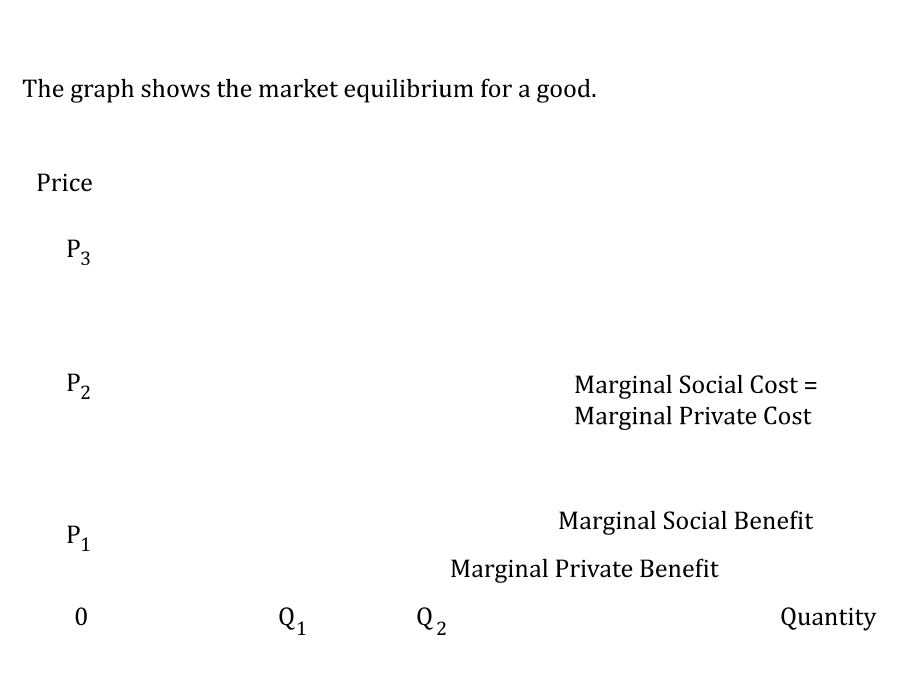
What is the socially optimal quantity, and what is the marginal external benefit at that quantity?
A. Q1, and the marginal external benefit isP1-P2
B. Q1, and the marginal external benefit is P2-P3,
C. Q2, and the marginal external benefit is P2
D. Q2, and the marginal external benefit is P2
E. Q2, and the marginal external benefit is P2-P3.
Question 9
Firm Z is a typical firm in a perfectly competitive market that produces a quantity of output where marginal revenue equals marginal cost in a constant cost industry. If the sum of Firm Zs' average fixed cost and average variable cost is below its marginal revenue at the profit-maximizing quantity, which of the following will occur in the long run?
A. The firm will increase output.
B. The firm will shut down.
C. The firm will increase price.
D. The firm will exit the market.
E. New firms will enter the market.
Question 10
A profit-maximizing firm hiring workers from a perfectly competitive labor market will continue to hire workers until the wage rate is equal to
A. Average variable cost
B. Average revenue
C. Marginal revenue
D. (Marginal cost)x(marginal product of labor)
E. (Marginal revenue)x(Marginal product of labor)
Question 11
The table shows the marginal utility that Olivia derives from consuming two goods: chocolate bars and slices of pizza.
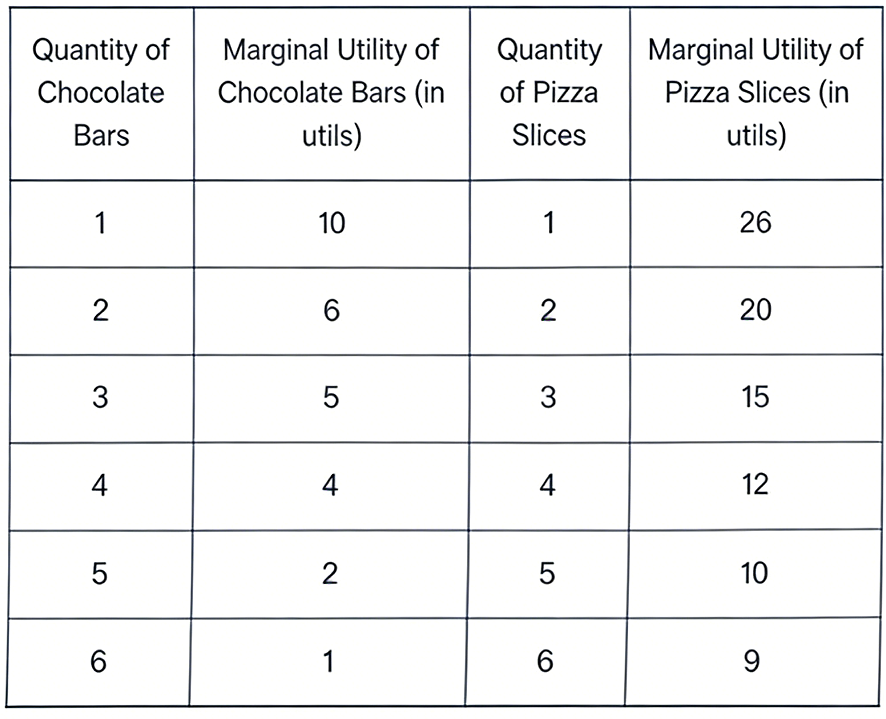
Olivia has a limited weekly income of 10 and spend it all on chocolate bars and slice of pizza. Assume that the price of chocolate bars is $1 the price of each slice of pizza is $2. What combination of chocolate bars and pizza slices will maximize Olivia’s total utility given her weekly income?
A. 0 chocolate bars and 5 slices of pizza
B. 1 chocolate bars and 2 slices of pizza
C. 2 chocolate bars and 4 slices of pizza
D. 4 chocolate bars and 3 slices of pizza
E. 6 chocolate bars and 2 slices of pizza
Question 12
Kareem is willing to pay 25 for ancuremote control produced by Remotek in a perfectly competitive market. Which of the following is true if the market price is 10?
A. Kareem’s consumer surplus is $10
B. Kareem’s consumer surplus is $15
C. Kareem’s consumer surplus is $25
D. Remotek’s producer surplus is $25
Question 13
The table shows the total cost schedule for a soybean farm.
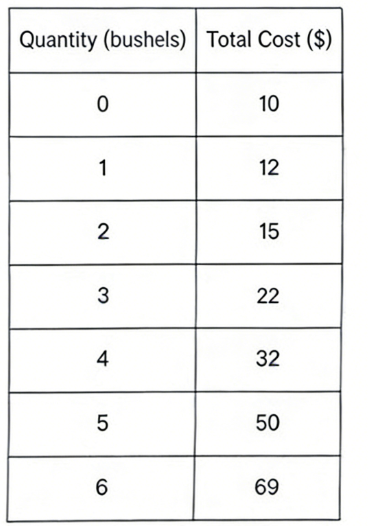
The farm grows and sells soybeans at a price of $15 per bushel competitive market. What is the farm's total economic profit at the profit maximizing quantity of output?
A. $10
B. $21
C. $23
D. $25
E. $28
Question 14
which of the following changes will increase the equilibrium market wage for plumbers?
A. A decrease in the market price of plumbing services
B. A decrease in the amount of vacation time taken by plumbers
C. A decrease in the productivity of plumbers
D. An increase in the fees for plumber licenses required to practice plumbing
E. An increase in the quality of working conditions for plumbers
Question 15
Tornado-warning sirens are usually paid for by local governments rather than private individuals because
A. each individual does not find the sirens to be of value
B. sirens are rival and excludable in consumption
C. private individuals lack the incentive to cover the cost of providing the sirens
D. sirens will be overproduced in the market equilibrium
E. it is cheaper to produce sirens for local governments than to produce them for private individuals
Question 16
A firm hires labor and rents machines as variable inputs from perfectly competitive factor market to produce Good X. The firm also requires land, as a fixed input, for is operation. The firm’s short-run profit maximizing quantity of output would not be affected by a change in which of the following?
A. The price of land
B. The price of Good X
C. The marginal product of labor
D. The marginal product of machines
E. The wage rate
Question 17
Which of the following is the best example of a fixed input for a firm producing leather boots in the short run?
A. Industrial sewing machines
B. Leather used to make the boots
C. Thread used to stitch the leather together
D. Unskilled labor working in the factory
E. Electricity used to power the factory
Question 18
If the only two firms in an industry collude to charge a higher price and produce a lower quantity than what is socially optimal, what will happen to consumer surplus and total economic surplus in the market in the short run?
A. Consumer surplus will decrease, and total economic surplus will stay the same
B. Consumer surplus will decrease and total economic surplus will increase
C. Consumer surplus will increase, and total economic surplus will decrease
D. Consumer surplus and total economic surplus will both increase.
E. Consumer surplus and total economic surplus will both decrease.
Question 19
The small town of Markervile had four firms producing coal. The four firms then merged into one firm which is now the sole employer of coal miners in Markervile. What effect will then change the market for coal miners in Marketville?
A. Equilibrium wages and the level of employment will both increase
B. Equilibrium wages will increase, and the level of employment will decrease.
C. Equilibrium wages and the level of employment will both decrease
D. Equilibrium wages will decrease, and the level of employment will increase.
E. Equilibrium wages will decrease, and the level of employment will remain the same
Question 20
Which of the following describes why scarcity exists in an economy?
A. There are more resources available than are being used.
B. Society's resources are underutilized
C. Society's wants exceed its available resources.
D. Prices of available resources are lower than consumers' willingness to pay
E. Prices of available resources are higher than consumers willingness to pay
Question 21
Which of the following describes a difference between the imposition of a tariff on imports and the imposition of a quota on imports?
A. A tariff will affect domestic consumption, whereas a quota will not
B. A tariff will affect domestic production , whereas a quota will not
C. A tariff will increase domestic consumer surplus, whereas a quota will not
D. A tariff will generate revenue for the government, whereas a quota will not
E. A tariff will eliminate deadweight loss, whereas a quota will not
Question 22
The table shows the market supply schedule for a good:
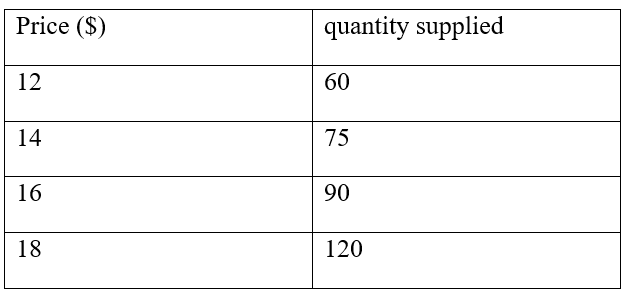
When the price changes from 14 to 16, the supply in this range is:
A. elastic
B. inelastic
C. unit elastic
D. Perfectly elastic
E. Perfectly inelastic
Question 23
Which of the following will definitely result in a decrease in a monopoly's profit-maximizing quantity of output?
A. A decrease in variable costs and the ability to perfectly price discriminate
B. A decrease in variable costs and a decrease in demand for the monopoly's output
C. An increase in variable costs and a decrease in demand for the monopoly's output
D. An increase in fixed costs and an increase in demand for the monopoly's output
E. An increase in fixed costs and the ability to perfectly price discriminate
Question 24
If a firm is experiencing increasing returns to scale, then doubling inputs will necessarily
A. Less than double total revenue
B. less than double economic profit
C. more than double average total cost
D. more than double marginal cost
E. more than double the quantity of output
Question 25
Which of the following is the best example of a fixed input for a firm producing leather boots in the short run?
A. Industrial sewing machines
B. Leather used to make the boots
C. Thread used to stitch the leather together
D. Unskilled labor working in the factory
E. Electricity used to power the factory
Question 26
Two monopolies with identical cost structures are compared. Cose is an unregulated profit-maximizing monopoly, and the other is regulated to produce the quantity at which it breaks even with zero economic profit. Which of the following accurately describes the difference between the two monopolies?
A.
| The Unregulated Monopoly |
The Regulated Monopoly |
| Charges a price equal to average total cost |
Charges a price equals to marginal cost |
B.
| The Unregulated Monopoly |
The Regulated Monopoly |
| Creates deadweight loss in the market |
Eliminates deadweight loss from the market |
C.
| The Unregulated Monopoly |
The Regulated Monopoly |
| Experiences economies of scale |
Experiences diseconomies of scale |
D.
| The Unregulated Monopoly |
The Regulated Monopoly |
| Collects all consumer surplus from the consumers |
Transfers all consumer surplus to the government |
E.
| The Unregulated Monopoly |
The Regulated Monopoly |
| Produces where marginal revenue equals marginal cost |
Produces where price equals average total cost |
Question 27
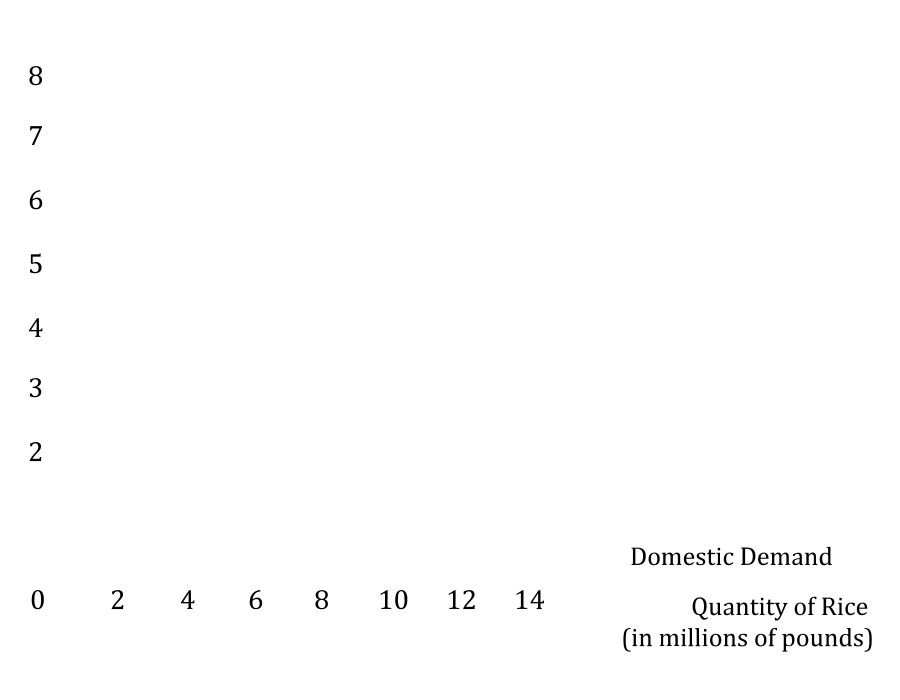
If rice is freely traded in the world and the world price of rice is $3. Then Deltaland will
A. Export 4 million pounds of rice
B. Export 8 million pounds of rice
C. Import 4 million pounds of rice
D. Import 8 million pounds of rice
E. Import 12 million pounds of rice
Question 28
Which of the following is always true for a perfectly competitive market?
A. Firms have no market power.
B. Firms produce differentiated products.
C. Firms earn positive economic profit.
D. There are high barriers to entry.
E. There are relatively few competitors.
Question 29
A firm hires labor and rents machines as variable inputs from perfectly competitive factor market to produce Good X. The firm also requires land, as a fixed input, for its operation. The firm’s short-run profit maximizing quantity of output would not be affected by a change in which of the following?
A. The price of land
B. The price of Good X
C. The marginal product of labor
D. The marginal product of machines
E. The wage rate
Question 30
Ally’s Candles and Bob’s Candles are the only two sellers of candles in town. Both candle companies considering changing their current pricing strategies. Each company is deciding between increasing prices or decreasing prices to increase their profits. Suppose Ally’s Candles realizes that increasing price will increase its profits regardless of what Bob's Candles does. Which of the following concepts best describes this situation?
A. Nash equilibrium
B. Price discrimination
C. Dominant strategy
D. Prisoner's Dilemma
E. Collusion
Question 31
The table shows the total cost schedules for FineSeat Company
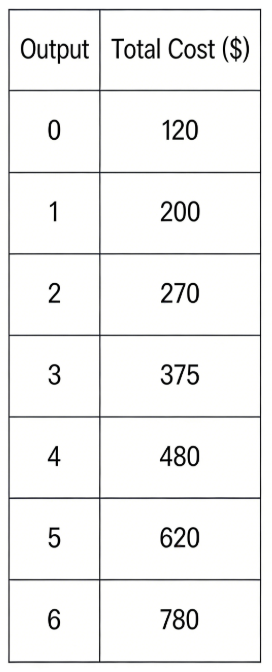
Fineseat Company produces chairs. How many chairs will FineSeat Company produce to minimize average variable cost?
A. 1 chair
B. 2 chairs
C. 3 chairs
D. 4 chairs
E. 5 chairs
Question 32
Nikita was working at a law firm earning an annual salary of $80,000 but she decided to start her own law practice. She used a building she owns and had been renting to a tenant for $15,000 a year. Her law practice earned an accounting profit of $90.000 in its first year. Based on the preceding information, Nikita's economic profit equaled
A. -$80,000
B. -$15,000
C. -$5,000
D. $10,000
E. $75,000
Question 33
The graph shows a per - unit subsidy being granted to producers of Good X. The letters on the graph represent enclosed areas.
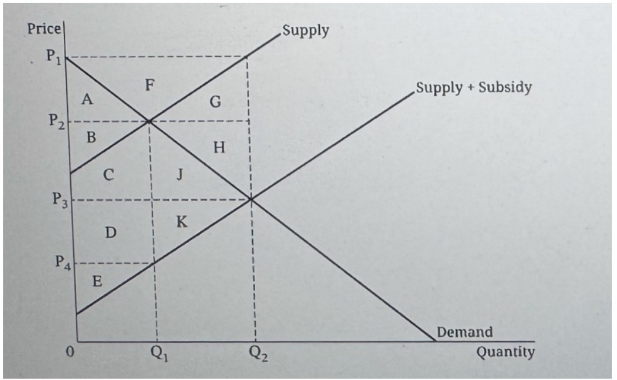
What is the total cost of the per - unit subsidy to the government?
A. Areas B, C and J
B. Areas B, C and D
C. Areas A, F and G
D. Areas A, B, C, F, G, H and J
E. Areas A, B, C, D, F, J and K
Question 34
Ming and Andreas are the only two employees at a pizza shop where they can either take orders or clean tables. Ming has a comparative advantage over Andreas in taking orders. It must therefore be true that
A. Ming has a higher opportunity cost for taking orders
B. Ming has an absolute advantage in taking orders
C. there is no advantage in specialization for Andreas
D. Andreas has an absolute advantage in cleaning tables
E. Andreas has a lower opportunity cost for cleaning tables
Question 35
The graph shows the cost and revenue curves for the firm LuxEcon.
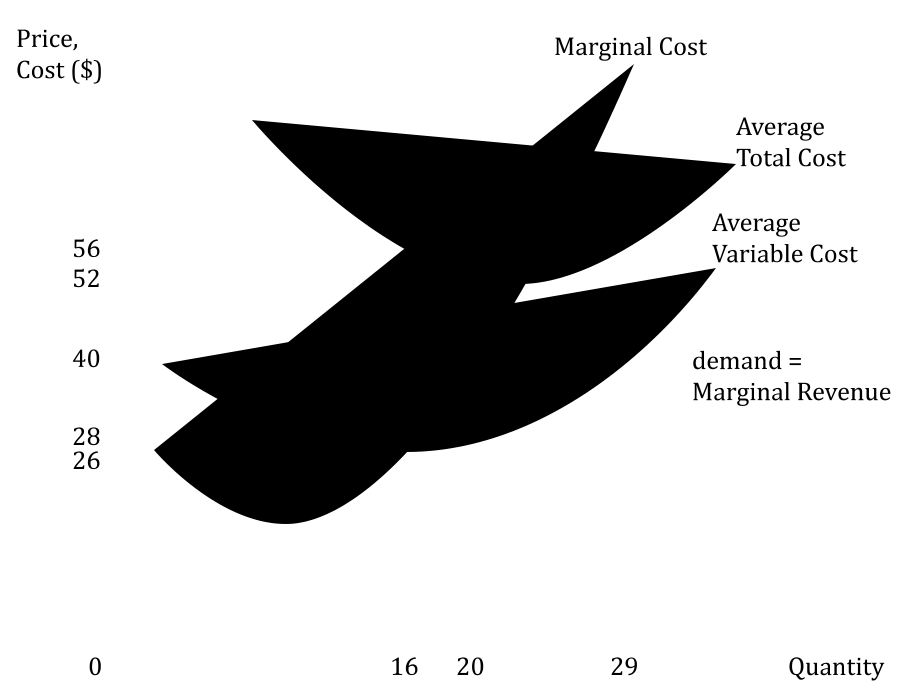
LuxEcon operates in a perfectly competitive market and produces the profit - maximizing quantity of output. Which of the following correctly identifies LuxEcon's profit - maximizing quantity and economic profit?
A. LuxEcon's profit - maximizing quantity is 16, and LuxEcon earns positive economic profit of $256.
B. LuxEcon's profit - maximizing quantity is 16, and LuxEcon earns negative economic profit of $256.
C. LuxEcon's profit - maximizing quantity is 20, and LuxEcon earns positive economic profit of $240.
D. LuxEcon's profit - maximizing quantity is 20, and LuxEcon earns negative economic profit of $240.
E. LuxEcon's profit - maximizing quantity is 20, and LuxEcon earns negative economic profit of $480.
Question 36
Donatello operates a firm that sells frozen treats in a perfectly competitive market. Which of the following would explain why Donatello is hiring more workers this year than last year?
A. Other firms have opened more stores selling frozen treats.
B. The government imposed a per - unit tax on consumers of frozen treats.
C. The government removed a quota on imported frozen treats.
D. There was an increase in demand for frozen treats.
E. There was a decrease in the price of frozen treats.
Question 37
Avocado production requires land to grow avocado trees and workers to pick the avocados. Which of the following is most likely to occur if a binding minimum wage (a price floor on wages) is set in the labor market of avocado - farming workers?
A. Supply of avocados will decrease.
B. Demand for avocados will decrease.
C. There will be a surplus of avocados.
D. Avocado producers will hire more workers.
E. The price of land used to grow avocados will increase.
Question 38
An air-conditioning unit is a normal good. Which of the following would cause an increase in the equilibrium price and equilibrium quantity of air-conditioning units in the short run?
A. Consumers expect a greater increase in the future price of air - conditioning units.
B. Producers expect a greater increase in the future price of air - conditioning units.
C. The price of air filters, an input in producing air - conditioning units, increases.
D. The price of fans, a substitute in consumption, decreases.
E. Consumers’ incomes decrease.
Question 39
A firm is selling its product in two separate markets. If the firm practices price discrimination, it is most likely to charge a higher price in the market that
A. has lower marginal cost
B. has no barriers to entry
C. contains a binding price ceiling
D. has fewer substitutes available
E. allows resale of the product
Question 41
A 5% increase in the price of Good A results in a 10% decrease in the quantity demanded of Good B. What is the cross - price elasticity between Good A and Good B, and what does this indicate about the relationship between these two goods?
A.
| Cross - Price Elasticity |
Relationship |
| -1 |
Complements |
B.
| Cross - Price Elasticity |
Relationship |
| -2 |
Complements |
C.
| Cross - Price Elasticity |
Relationship |
| 0.5 |
Complements |
D.
| Cross - Price Elasticity |
Relationship |
| -2 |
Substitutes |
E.
| Cross - Price Elasticity |
Relationship |
| 0.5 |
Substitutes |
Question 42
Which of the following best explains the difference in resource allocation between a pure command economy and a pure market economy?
A. A pure command economy allocates resources based on individual choices, whereas a pure market economy allocates resources using central planning.
B. A pure command economy allocates resources to maximize profits, whereas a pure market economy allocates resources to maximize revenues.
C. A pure command economy allocates resources using central planning, whereas a pure market economy relies on market forces to allocate resources.
D. A pure command economy allocates resources to eliminate income inequalities, whereas a pure market economy allocates resources to eliminate negative externalities.
E. A pure command economy allocates resources to achieve allocative efficiency, whereas a pure market economy allocates resources to achieve productive efficiency.
Question 43
The graph shows a production possibilities curve for a country.
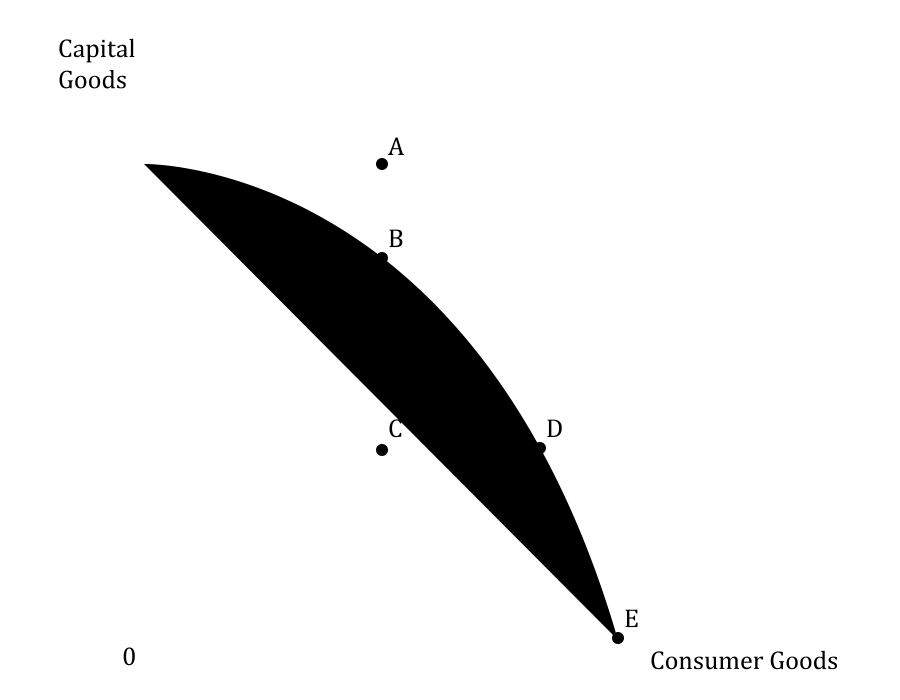
Assuming no change in the country's quantity and productivity of resources, the country can produce more capital goods without giving up any consumer goods if the country is currently producing at which point?
A. Point A
B. Point B
C. Point C
D. Point D
E. Point E
Question 44
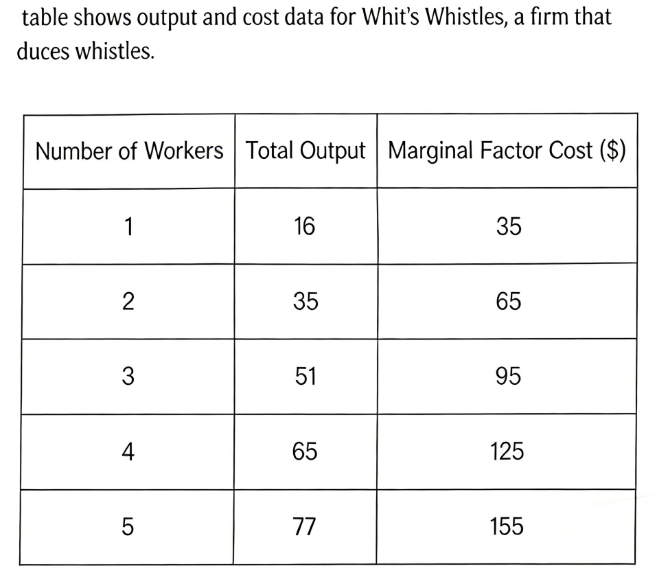
What's Whistles is a profit maximizing firm that hires workers from a monopsonistic labor market, the market for whistles is perfectly competitive, and the equilibrium price of whistles is $10.How many workers will Whit's Whistles hire to maximize profits?
A. 1
B. 2
C. 3
D. 4
E. 5
Question 45
If the income elasticity of demand for Good X is negative, how will an increase in consumers' income affect market for Good X?
A. The demand curve will shift to the left, the equilibrium price will increase, and the equilibrium quantity will decrease.
B. The demand curve will shift to the left, and both the equilibrium price and quantity will decrease.
C. The demand curve will shift to the right, and both the equilibrium price and quantity will increase.
D. The supply curve will shift to the night, the equilibrium price will decrease. and the equilibrium quantity will increase.
E. The supply curve will shift to the left, the equilibrium price will increase, and the equilibrium quantity will decrease.
Question 46
Suppose that Lindser landscaping is the sole provider of landscaping services in a small city. A new firm Horticultural Experts, enters the market which of the following is most likely to occur?
A. Lindser Landscaping's demand will become more inelastic.
B. lindser Landscaping's total revenues will decrease.
C. Lindser landscaping's economic profit will increase.
D. Lindser landscaping's economic profit will increase.
E. The market price of landscaping services will increase.
Question 47
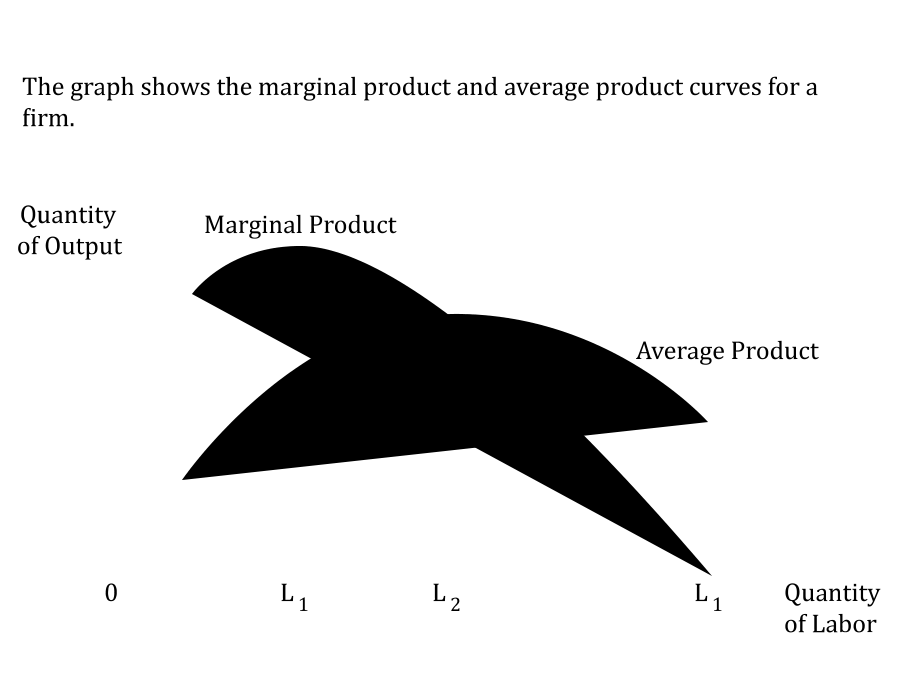
Which of the following is true about the production function as labor usage increases from L1 to L2 when all other inputs are held constant?
A. There are increasing marginal returns.
B. There are diminishing marginal returns.
C. There are decreasing returns to scale.
D. Total product is maximized when the firm hires l1 units of labor.
E. Total product is maximized when the firm hires l2 units of labor.
Question 48
A firm in a monopolistically competitive market is producing the profit maximizing quantity at 60 units of output at a price of 12 per unit. What is the firm’s economic profit if the firm’s average variable cost is 8, its marginal cost is 7,and its average fixed cost is 2 at 60 units of output?
A. -300$
B. 120$
C. 180$
D. 240$
E. 300$
Question 49
Which of the following would cause a decrease in both the market wage and the equilibrium quantity of labor?
A. A decrease in the supply of labor
B. A decrease in the price of labor
C. A decrease in the price of capital, a substitute for labor
D. An increase in the minimum wage
E. An increase in the productivity of labor
Question 50
Good X, a popular item with consumers, is non-rival and non-excludable in consumption. What is the most likely outcome in the market for Good X if there is no government intervention?
A. Firms will provide the socially optimal quantity of Good X because consumers will have a demand for
B. Firms will provide the socially optimal quantity of Good X because they will be profitable in the short run.
C. Firms will provide the socially optimal quantity of Good X despite the fact that marginal social cost is greater than the marginal private cost at the equilibrium market quantity.
D. Firms will not provide the socially optimal quantity of Good X because people are able to consume it without having to pay for it.
E. Firms will not provide the socially optimal quantity of Good X because the marginal social cost is greater than the marginal private cost at the equilibrium market quantity.
Question 51
Which of the following is an example of a negative externality in production?
A. An electronics store decreases the price of TVs during the holidays.
B. A car insurance company charges a higher price for teenage drivers.
C. A local paper mill emits an odor imposing equilibrium costs on nearby residents.
D. A pine tree in a public park provides pleasant shade for residents.
E. A photographer accepts e price for work below marginal cost.
Question 52
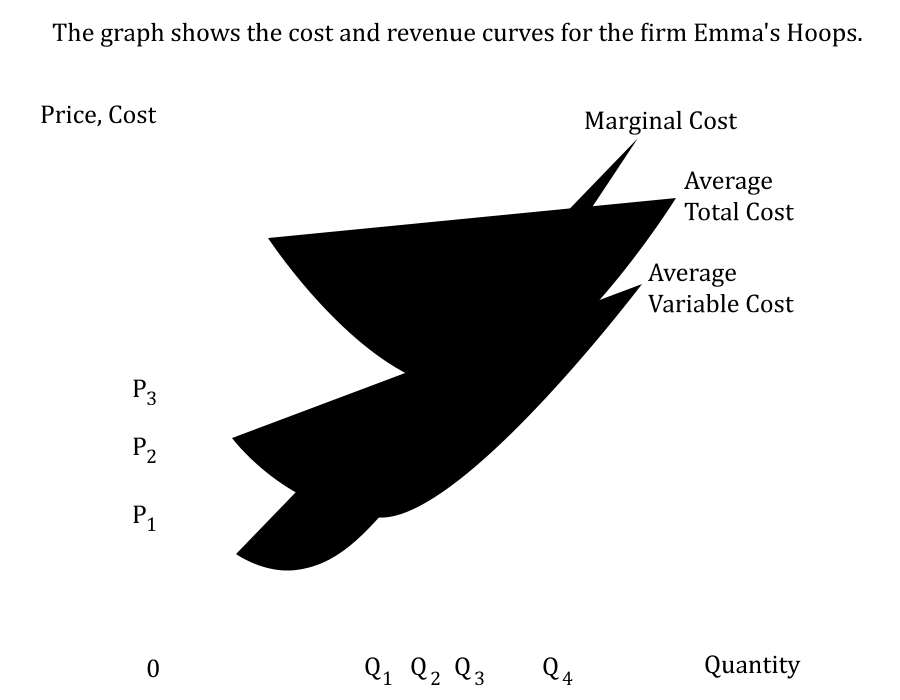
Emma's Hoops produces toy hoops that are identical to all other toy hoops produced by many firms in a market with no barriers to entry. The market price of toy hoops is P
2, and Emma's Hoops is producing the quantity Q
3 of toy hoops. Which of the following is true?
A. The firm's average fixed cost is equal to P3 - P1.
B. The firm is currently earning negative economic profit.
C. The firm is facing a perfectly inelastic demand curve.
D. The firm should decrease production to Q2 to maximize economic profit.
E. The firm should increase its price to P3 to maximize economic profit.
Question 53
If the government imposes a binding price ceiling in the gasoline market, which of the following will occur in the short run?
A. The demand for gasoline will increase
B. The demand for gasoline will decrease
C. The quantity demanded of gasoline will increase
D. All individuals in the gasoline market will be better off
E. All individuals in the gasoline market will be worse off
Question 54
The table shows the number of labor hours it takes Alpha and Beta to produce a smartphone or a cake with the same resources.
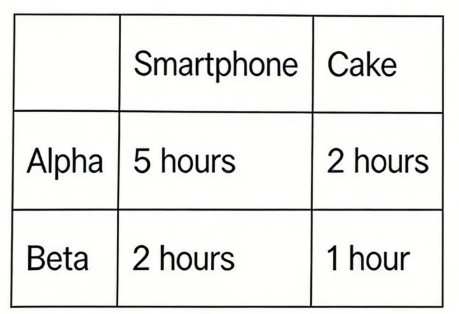
If tasks assigned according to comparative advantage ,Which of the following is true?
A. Alpha will produce both goods
B. Beta will produce both goods
C. Alpha will produce cellphones and Beta will produce cakes
D. Alpha will produce cakes and Beta will produce cellphones
E. Alpha has an absolute advantage in producing all goods
Question 55
The market for bottled mineral water is perfectly competitive. After she discovery of several new sources of mineral water, the price of bottled mineral water decreases. The substitution effect of the price decrease implies an increase in which of the following?
A. The supply of bottled mineral water
B. The quantity demanded of bottled mineral water
C. The demand for bottled mineral water
D. The demand for bottled purified water, a substitute in consumption
E. The total revenue of firms selling bottled mineral water
Question 56
Which of the following conditions is necessary for productive efficiency?
A. The firm is producing at the point where the marginal product of labor is greater than the average product of labor.
B. The firm is producing a given level of output with a least-cost combination of inputs.
C. Consumer surplus is minimized.
D. There are external costs.
E. There is no government regulation.
Question 57
A perfectly competitive market in equilibrium is allocatively efficient and it maximizes
A. total consumer surplus
B. total producer surplus
C. the sum of total consumer surplus and total producer surplus
D. total revenue
E. total external benefits
Question 58
Reff Corp is a firm with total revenue of $1,000, marginal cost of $5, and average variable cost of $4. Both the output and the input markets are perfectly competitive, and Reff Corp is currently in long-run equilibrium. Reff Corp's output and total fixed cost of production must be equal to which of the following?
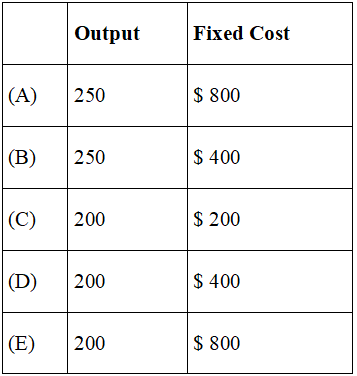
A. A
B. B
C. C
D. D
E. E
Question 59
At a perfectly competitive firm's current output level, average total cost is $15, average variable cost is $10, and marginal cost is $8 and increasing. If the product price is $15, what should this firm do to maximize profits?
A. Increase the quantity of output produced.
B. Increase the product price.
C. Decrease the product price to increase sales.
D. Shut down immediately.
E. Continue to produce at its current output level.
Question 60
A typical firm in a perfectly competitive constant-cost industry is operating with an economic loss in the short run. When the industry returns to long-run equilibrium, what will happen to the number of firms in the industry, the market price, and the typical firm's quantity?
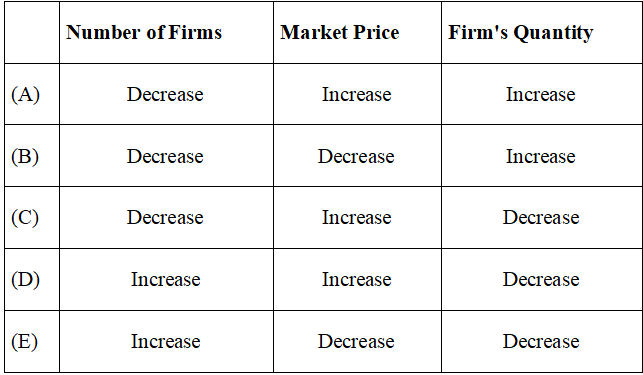
A. A
B. B
C. C
D. D
E. E
Section II - Free Response (3 questions)
Question 1
Answer this question in your free-response booklet.
1.
Tronic is a typical profit-maximizing firm that produces and sells power cords in a constant-cost, perfectly competitive market that is in long-run equilibrium. The market equilibrium price of power cords is $4.
Part A
Draw correctly labeled side-by-side graphs for the power cord market and for. Tronic. and show each of the following.
i. The market equilibrium price and quantity, labeled $4 and Qm respectively
ii. Tronic's profit-maximizing price and quantity, labeled Pf and Qf, respectively
iii. Tronic's average total cost curve consistent with long-run equilibrium, labeled ATC
Part B
The price of Good X, a complement in consumption to power cords, has increased. On your graphs in part A, show the impact of this change in the short run on each of the following.
i. The new market equilibrium price and quantity of power cords, labeled P2and Q2 respectively
ii. Tronic's new profit-maximizing price and quantity, labeled P* and Q*, respectively
iii. The area representing Tronic's economic profit, shaded completely
Part C
Given the increase in the price of Good X, what will happen to the market equilibrium price and quantity of power cords as the market adjusts from the short-run equilibrium in part B to the long-run equilibrium? Explain.
Part D
Tronic uses the cost-minimizing combination of capital and labor in its production process. The marginal product of labor is 75 power cords, the wage rate is 25, and the rental rate for capital is 40.
Calculate the marginal product of capital. Show your work.
Part E
Consumers can choose whether to use power cords or smart cables. A 10 percent decrease in the price of smart cables caused the quantity demanded of smart cables to increase by 12 percent and the quantity demanded of power cords to decrease by 8 percent. Calculate the cross-price elasticity of demand for power cords with respect to the price of smart cables. Show your work.
Question 2
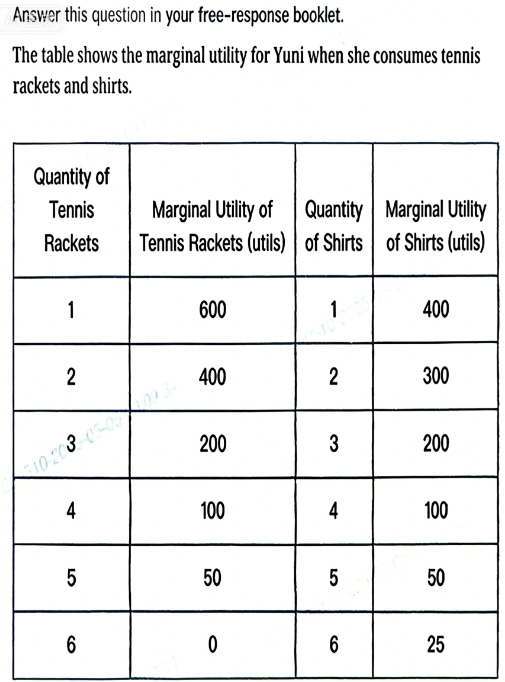
Part A
Suggest Yuni whether to consume 1 tennis racket or 2 shirts to maximize her total utility,
Part B
i.
The cost is $100 for one tennis racket and $50 for one shirt, with an income of $500, Yuni decided to buy 2 tennis rackets, suggest Yuni the maximum number of shirts she could buy after she purchases 2 tennis rackets.
ii.
Find the utility-maximizing combination of tennis racket and shirts Yuni could buy with her income of $500.
Part C
if the consumption of tennis rackets results in a positive externality, is the marginal social benefit of tennis rackets greater than, lower than, or equal to the marginal social cost at the market equilibrium?
Part D
In order to eliminate the deadweight loss generated by the positive externality, the government decide to give a per-unit subsidy to consumers who consume tennis rackets, could this policy effectively solve the problem of positive externality?
Question 3
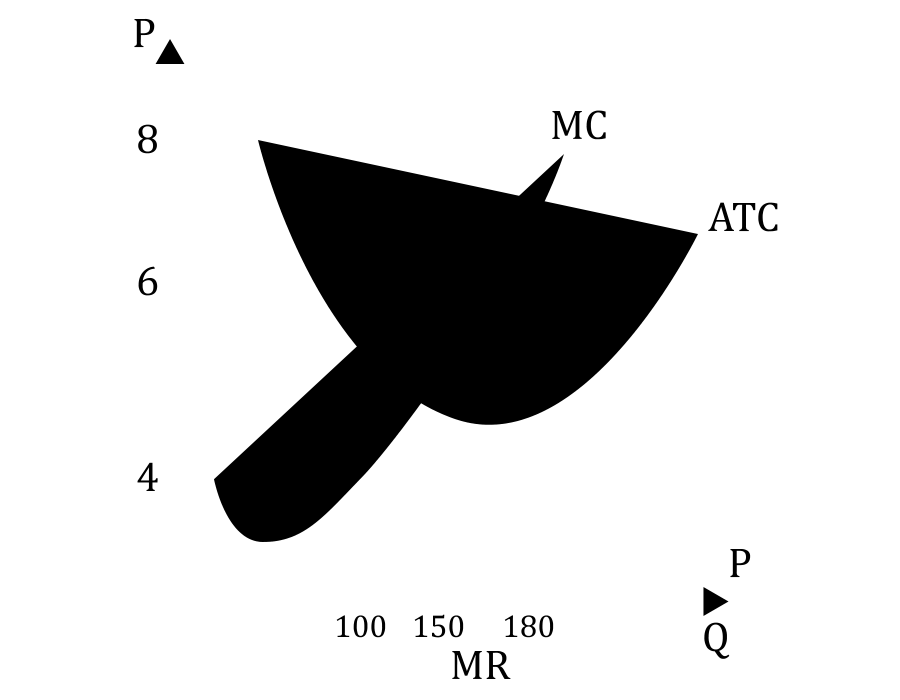
Haye is one of many firms that produce moisturizers in a market in which each firm slightly differentiates its product and there are no barriers to entry or exit
Part A
Identify the market structure in which Haye is operating
Part B
Identify Haye's profit maximizing quantity and price
Part C
Calculate the consumer surplus at the profit-maximizing quantity and price identified in part B. Show your work
Part D
is the profit-maximizing quantity identified in Part B allocatively efficient? Explain using numbers.
Part E
What will happen to Haye’s economic profit in the long run? Explain.
Multiple-choice answer key
Answers reproduced from the website. No FRQ scoring guide was provided in the question pages.
1: D | 2: A | 3: A | 4: C | 5: B
6: E | 7: D | 8: E | 9: E | 10: E
11: C | 12: B | 13: E | 14: D | 15: C
16: A | 17: A | 18: E | 19: C | 20: C
21: D | 22: A | 23: C | 24: E | 25: A
26: E | 27: D | 28: A | 29: A | 30: C
31: B | 32: C | 33: D | 34: E | 35: D
36: D | 37: A | 38: A | 39: D | 40: D
41: B | 42: C | 43: C | 44: D | 45: B
46: B | 47: B | 48: B | 49: C | 50: D
51: C | 52: B | 53: C | 54: D | 55: B
56: B | 57: C | 58: C | 59: A | 60: A